Skip to Main Content
Let's Talk
Menu Close

Higher Ed at a Crossroads

Higher Ed at a Crossroads

Published
21 August 2025

Building the Future-Ready (and Energy-Smart) Campus

Walk around any college or university these days and you’ll quickly sense it: campuses are buzzing with big questions, anxious optimism, and a new urgency to do things differently. Higher education is facing stormy weather from all sides—shaky enrollments, tight finances, deferred maintenance headaches, and a growing expectation from students (and their families) that campus life will be as smart, sustainable, and comfortable as the world outside. Welcome to the crossroads.

After spending time at this year’s NACUBO Annual Meeting and digging into the very latest industry reports (the ones the presidents and CFOs really read), one thing is clear: “business as usual” is officially over. The universities—and their partners—who will win the next decade are those ready to think strategically, act with data, and squeeze every drop of value out of every square foot and every BTU. Spoiler alert, this is where we come in.

The Pressure Cooker: How Today’s Higher Ed Market Really Feels

If the last few years have felt like a roller coaster for campus leaders, you’re not alone. COVID slammed the brakes, then interest rates, supply chain chaos, and rising construction and operating costs made the path forward murkier than ever. The 2024 State of the Industry Report from Brailsford & Dunlavey paints a picture of a sector in flux: more projects are coming over the finish line now than in the bleakest parts of the pandemic, but average transaction sizes are down, and the easy-money days are gone.

There’s also a widening gap between “have” and “have-not” institutions, and a creeping anxiety about how smaller schools can keep up—or even get developer attention for new facilities. Meanwhile, the next big enrollment cliff looms, making it even more critical that every dollar spent actually attracts, retains, and delights students.

What Are Campus Leaders Talking About? Four Big Shifts

Here’s what we heard, loud and clear, at NACUBO 2025, and what’s shaping how the smartest institutions are rethinking their futures:

1. Every Campus Dollar Needs to Work Smarter

Forget about firefighting with the annual budget. Today, with about 70% of a building’s lifetime costs living in operations and maintenance, universities are demanding real and ongoing efficiency, savings, and performance. Our team specializes in deploying intelligence and AI-powered analytics right into your existing systems and partnering with you to turn the data into action. Efficiency of your operations teams and systems isn’t a “wish list” item; it’s a guaranteed outcome.

2. Deferred Maintenance Is No Longer Invisible

Campus leaders are fed up with surprises—whether it’s critical infrastructure failing mid-semester or volatile energy bills compounding budget woes. Proactive and predictable is the expectation. We deliver campus upgrades that create certainty both financially and technically. Operationally focused planning, funding and implementing campus wide infrastructure projects sets us apart.

3. Tear Down the Silos—Unify Data, Unify Strategy

Enrollment, housing, operations, energy…these are all just pieces of the same student experience puzzle. Trying to optimize each one in a vacuum is yesterday’s problem. The winning approach? Connect the dots—our platforms bring together live data on enrollment, occupancy, utilities, and asset health to help you make smarter decisions campus-wide.

4. Partner Up—but Read the Fine Print

Lots of institutions are eyeing public-private partnerships (P3s) for new energy systems, student housing, you name it. These partnerships can be powerful—but only when everyone’s incentives align for the long haul. Forget the quick wins; we help universities look at the big picture, measuring outcomes for years (not just upfront financial relief).


The “Secret Sauce”: What Innovative Campuses Are Now Doing

Think of facilities and energy management as quiet heroes on your campus. When it works, students stay comfortable, healthy, and engaged. When it doesn’t, you hear about it—sometimes in the form of lost enrollment. When we partner with you to plan, fund, and deliver infrastructure and deferred maintenance projects, we create long-term certainty and savings in your operational budget—unlocking more resources to enrich student life, fuel academic innovation, and strengthen retention.

Facing the Future—Together

The bottom line? Higher ed is being forced to reboot how it thinks about its physical footprint and every resource invested in campus life. Those who integrate operations, strategy, finance, and technology will stand out in a fiercely competitive market where every potential student has choices. Whether you’re a flagship public university, an ambitious regional, or a tuition-dependent private, your path to resilience starts with using what you have—smarter.

Curious to learn more?

We are always eager to share success stories, explore new ideas, and help your campus unlock its next chapter of impact. The crossroads is here—let’s take the smarter path, together. Let’s build a future where your facilities, your finances, and your student experience all work in harmony.

The ‘One Big Beautiful Bill’ Arrives

The ‘One Big Beautiful Bill’ Arrives

Published
19 August 2025

What It Means for Your Capital Projects and Why You Need to Act Expeditiously on Clean Energy

“The only thing more expensive than education is ignorance,” a sentiment often attributed to Benjamin Franklin, holds profound resonance today as the “One Big Beautiful Bill Act” officially became law on July 4, 2025. This isn’t merely another piece of legislation; it’s a monumental recalibration of the tax landscape, poised to directly influence every future capital project for institutions spanning healthcare, higher education, and advanced manufacturing. While the Act does offer some welcome stability by extending or making certain permanent provisions from the 2017 Tax Cuts and Jobs Act (TCJA) and incorporating other anticipated business incentives, one of its most critical and immediate impacts lies in the profound alterations it introduces to several pivotal clean energy tax incentives. A comprehensive grasp of these significant shifts is not merely beneficial, but absolutely imperative for strategic planning, often demanding swift and decisive project acceleration.

Key Impacts and Essential Considerations

Bonus Depreciation Extended: A Strategic Advantage for Capital Investments

The Act amends the bonus depreciation phaseout (which is currently at 40%) and reestablishes and extends 100% bonus depreciation until January 1, 2030, for qualified property acquired and placed in service after January 19, 2025. This provision allows businesses to immediately deduct the entire cost of eligible assets in the year they are placed in service. This extension presents a substantial financial advantage for organizations planning investments in new equipment, facilities, or technology, potentially influencing the funding structure of projects on either a taxable or tax-exempt basis. Importantly, there are no retroactive changes to bonus depreciation for the 2023 and 2024 tax years.

Section 179D – Tax Deduction for Energy-Efficient Commercial Buildings: A Call for Immediate Action

A critical development to note is the termination of the Section 179D tax deduction for properties commencing construction after June 30, 2026. This deduction incentivizes energy-efficient improvements to commercial buildings’ interior lighting, HVAC, hot water systems, and building envelopes. This change will significantly impact projects scheduled for commencement after June 30, 2026. Organizations seeking to leverage these deductions—which can increase with higher energy savings and if prevailing wage and apprenticeship requirements are met —should prioritize advancing their construction timelines to begin before June 30, 2026. For illustrative purposes, in 2025, the deduction amounts range from $2.90-$5.81 per square foot (depending on prevailing wage and apprenticeship requirements). This deduction can be utilized by the designer and passed onto to the impacted institution.

Clean Electricity Investment Tax Credit (Section 48E) and Production Tax Credit (Section 45Y) Expedite Solar and Wind Projects

The Act sunsets both the Section 48E ITC and Section 45Y PTC for solar and wind facilities, with eligibility dependent on when construction commences or when the facility is placed in service. To remain eligible for these essential credits, projects must be placed in service on or before December 31, 2027, unless construction began by July 4, 2026. After December 31, 2027, solar and wind facilities will generally no longer qualify for these tax credits. This modification will notably impact solar projects closing after 2027. Furthermore, tax-exempt entities can utilize elective pay (direct pay) to receive a payment equivalent to the full value of the 48E ITC and eligible bonus credits until expiration.

What is the Section 48E ITC?

This “technology-neutral” credit applies to clean energy facilities achieving net-zero greenhouse gas emissions, placed in service on or after January 1, 2025. Eligible technologies include wind, solar, energy storage (such as batteries), and geothermal. The base credit is 6% of the qualified investment, with potential increases for meeting other requirements, such as prevailing wage and apprenticeship (up to 30%).

What is the Section 45Y PTC?

This technology-neutral tax credit for clean electricity production offers a 10-year credit period that commences when the facility is placed in service after December 31, 2024. The credit begins at a base rate of 0.3 cents per kilowatt-hour of electricity produced and sold to an unrelated person, with a higher base rate (1.5 cents) applicable to small facilities (maximum output less than 1 megawatt) that meet certain prevailing wage and registered apprenticeship requirements. The rate will be adjusted for inflation, and increases are available for domestic content or if located in an energy community. It is important to note that both Section 48E ITC and Section 45Y PTC cannot be claimed for the same property.

Note on Section 48E and 45Y: The credits remain viable for fuel cell, battery, and geothermal projects through 2033, with a gradual phase-out beginning in 2034 and full phase-out in 2036.

Section 30C – Electric Vehicle Tax Credits: Strategic Planning for EV Charging Infrastructure is Essential


The Section 30C credit for alternative fuel vehicle refueling property, including Electric Vehicle charging equipment, will terminate with respect to property placed in service after June 30, 2026. This means that following this date, EV charging stations will no longer be considered a scope savings incentive. Organizations planning to install EV charging infrastructure should consider accelerating these projects to be placed in service before July 1, 2026, to take advantage of the existing credit.

Our Recommended Actions for Clients:

The “One Big Beautiful Bill Act” undeniably reshapes the fiscal environment, presenting a complex interplay of both strategic opportunities and pressing deadlines. Unlike past legislative changes, the precise and immediate implications of this Act demand a proactive and informed response. By comprehensively understanding these pivotal shifts and acting with decisive strategic agility, organizations across healthcare, higher education, and advanced manufacturing are not merely adapting, but critically positioning themselves to optimize project planning, maximize financial outcomes, and maintain a competitive edge in a rapidly evolving economic landscape. The time for analysis alone has passed; the moment for accelerated informed action is now.

AI, We See You: A Day to Appreciate Artificial Intelligence

AI, We See You: A Day to Appreciate Artificial Intelligence

Published
18 July 2025

Despite the apprehension surrounding AI adoption, the AI market is seeing fast growth. It reached $184.04 billion in 2024 and is expected to surpass $200 billion by the end of 2025, continuing to climb to $826.73 billion by 2030. While there are growing pains, the majority are seeing that AI is a useful tool that enhances productivity.


AI Appreciation Day is an opportunity to acknowledge the transformative power of artificial intelligence. Today, we are highlighting the role AI plays in the tech industry by sharing the perspectives of the following tech experts on the implementation of AI.

Software as a Service

Jason Whittier, VP of Product Development shares, “At Optimum Energy, AI is fundamental to how we help customers achieve smarter, more sustainable operations. Our intelligent HVAC optimization and Energy as a Service (EaaS) solutions are powered by AI and Machine Learning to reduce energy use, lower costs, and minimize environmental impact…”

Click here to continue reading.

Optimum Energy Celebrates Penn State Health 2025 IDEA Innovation Award Win

Optimum Energy Celebrates Penn State Health 2025 IDEA Innovation Award Win

Published
04 June 2025

Seattle & Baton Rouge, June 4, 2025 – Optimum Energy proudly congratulates Penn State Health on receiving the prestigious 2025 Joseph M. Brillhart IDEA Innovation Award. Presented by the International District Energy Association (IDEA), this prestigious honor recognizes the health system’s transformative approach to energy optimization across its Milton S. Hershey Medical Center campus, a nationally recognized facility, and the only combined Level I trauma center for both children and adults in Pennsylvania.


Since launching its energy strategy in 2009, Penn State Health has executed a long-term, integrated approach to energy system resilience and efficiency. This includes advanced chilled water optimization delivered in partnership with Optimum Energy, alongside on-site power generation, thermal energy storage, and waste heat recovery innovations. The initiative has reduced the campus’s energy use intensity by 25%, generated more than $59 million in financial benefit, and eliminated over 40,000 metric tons of CO₂ emissions annually, all while ensuring uninterrupted patient care in a 24/7 critical care environment.


“This recognition from IDEA is an honor and highlights our team’s steadfast commitment to innovation, resilience, and environmental responsibility,” said Kevin Kanoff, Campus Energy Engineer at Penn State Health. “While the challenges of optimizing energy systems in a Level 1 Trauma Center for both children and adults are significant, the opportunity to lead in this area is equally important. We’ve proven that reliability and sustainability can be achieved together, even in the most demanding clinical settings.”


“Research and medical campuses are frequently hesitant to adopt energy efficiency measures, even when the potential for significant cost savings is evident,” said Lisa Roy, CEO and President of Optimum Energy. “The risks associated with any interruption to service in critical environments can understandably outweigh innovation. With this project, Penn State Health demonstrated that it’s possible to be technically bold while operationally respectful, achieving meaningful gains in cost savings, reliability, and environmental performance.”


Optimum Energy supported Penn State Health by implementing chilled water optimization, which enhanced system performance and resulted in more than $300,000 in annual electricity savings. The work was carefully phased to ensure zero disruption to clinical operations, supporting Penn State Health’s mission to provide world-class care while advancing environmental stewardship.


The award-winning project shows how Penn State Health, Optimum Energy, and a team of partners and contractors worked together on the energy optimization program. This teamwork demonstrates that large institutions can reduce carbon emissions while maintaining performance, safety, and continuity of care.


To learn more about the IDEA Innovation Award and this year’s recipients, visit www.districtenergy.org

About Optimum Energy
Optimum Energy provides holistic energy solutions that empower mission-critical facilities—including hospitals, research campuses, higher education institutions, and advanced manufacturing facilities—to achieve measurable efficiency and resilience. Our comprehensive offerings span design, engineering, optimization, operations and maintenance, and financing, delivered as an integrated program or tailored to specific project needs. We leverage advanced technologies, such as AI-driven analytics and predictive maintenance, to provide sustained savings and reliability. With flexible delivery models, including Energy-as-a-Service, off-balance sheet structures, and private funding, we help clients accelerate cost savings and meet performance goals with confidence.

About Penn State Health
Penn State Health is an integrated academic health system serving patients and communities across 15 counties in central Pennsylvania. The system includes Penn State Health Milton S. Hershey Medical Center, Penn State Health Children’s Hospital and Penn State Cancer Institute based in Hershey, Pa.; Penn State Health Hampden Medical Center in Enola, Pa.; Penn State Health Holy Spirit Medical Center in Camp Hill, Pa.; Penn State Health Lancaster Medical Center in Lancaster, Pa.; Penn State Health St. Joseph Medical Center in Reading, Pa.; Pennsylvania Psychiatric Institute, a specialty provider of inpatient and outpatient behavioral health services, in Harrisburg, Pa., and 2,417 physicians and direct care providers at 186 outpatient practices. Additionally, the system jointly operates various health care providers, including Penn State Health Rehabilitation Hospital, Hershey Outpatient Surgery Center and Hershey Endoscopy Center. In 2017, Penn State Health partnered with Highmark Health to facilitate creation of a value-based, community care network in the region. Penn State Health shares an integrated strategic plan and operations with Penn State College of Medicine, the University’s medical school.

Proven Construction Best Practices for Smarter, Sustainable Project Results 

Proven Construction Best Practices for Smarter, Sustainable Project Results 

Published
29 May 2025

In today’s built environment, delivering a successful construction project requires more than meeting milestones and staying within budget. It demands strategic leadership, thorough preparation, and a disciplined focus on outcomes. For institutions managing complex infrastructure such as healthcare systems, universities, or advanced manufacturing facilities, the ability to align technical execution with long-term value is essential. 

Jarret Lemmon of Optimum Energy, LLC brings more than four decades of construction and engineering expertise to this challenge. His perspective underscores a fundamental truth: although project types and scales may vary, the drivers of lasting success remain constant. At Optimum Energy, these drivers have been strengthened by combining traditional construction best practices with advanced energy optimization and intelligent technology. This approach results in smarter, more efficient, and more sustainable project delivery. 

The following are the core practices that have consistently proven effective in addressing today’s construction challenges and in creating long-term value across a wide range of projects. 

  1. Safety is not just a compliance metric, it is a strategic enabler of cost control, quality, and schedule adherence. At Optimum Energy, we view safety as a core value that ultimately drives efficiency and reduces risk exposure. While many safety-related cost savings are considered soft costs and can be difficult to quantify precisely, our commitment to engineering controls and proactive planning minimizes risk before work begins. 
  1. Define Success Upfront: Every project should begin with a clear definition of what success looks like, moving beyond “on time and on budget” to encompass energy performance, operational reliability, and long-term facility outcomes. At Optimum Energy, we develop and implement a robust Project Execution Plan at the outset, supported by a Level III Primavera schedule, a detailed Safety Execution Plan, and a tailored Quality Plan.

  1. Equally critical is upfront logistics planning to minimize disruption to occupied or operational facilities. We pre-plan all major activities—such as heavy lifts—with engineered rigging strategies and crane specifications determined and approved well in advance. These measures ensure precision, predictability, and safety throughout execution. 
  1. Constructability is a foundational discipline in our approach. In close collaboration with engineers and architects, we proactively review design documents to ensure that construction methods are efficient, practical, and cost-effective. This constructability review identifies opportunities to streamline workflows, reduce field conflicts, and shorten schedules, ultimately saving both time and money. 
  1. We embed safety into every phase of the project through a dedicated Safety Execution Plan, structured site protocols, and early coordination with field and engineering teams. These efforts help prevent incidents that could otherwise cause costly delays or rework. While we often see reduced project disruption because of our approach, we recognize that assigning a specific percentage of savings to safety efforts is complex and context dependent. 
  1. Lead with Clear Accountability: A successful project relies on teams working in sync. We make it a priority to stay connected with leaders across engineering, procurement, project controls, and field operations to ensure open communication and clear accountability. Our use of Technology-Driven Project Controls means every stakeholder has access to real-time data from the field—enabling faster, more informed decisions and minimizing delays caused by miscommunication. 
  1. Focus on Long-Term Performance: Our commitment doesn’t end at substantial completion and commissioning; we remain focused on how the project performs over time. Our Long-Term Performance Guarantees, while uncommon in our industry, reflect our confidence and commitment. We ensure that energy savings and system reliability continue to exceed expectations long after construction is wrapped up. 
  1. Embrace Continuous Improvement: Every project offers valuable lessons. At Optimum Energy, we’ve cultivated a Continuous Improvement Culture that includes structured lessons-learned reviews and formal knowledge sharing. This commitment has resulted in a remarkable 15% year-over-year improvement in our execution efficiency. 
  1. Leverage Data for Informed Decisions: In today’s construction landscape, data is your most powerful asset. Our software heritage provides us with a distinct advantage—our teams utilize real-time analytics to meticulously monitor progress, strategically allocate resources, and make smarter decisions at every phase of the project. This Data-Driven Decision Making ensures we remain agile, well-informed, and consistently focused on what truly matters: achieving optimal client outcomes. 
  1. Design with the End-User in Mind: Our approach seamlessly integrates technical excellence with a deep understanding of user needs. Thanks to our Client-Centric Approach, we focus not just on the build itself but on how our clients will ultimately live and operate within the spaces we create. This perspective allows us to tailor every decision, from material selection to scheduling and commissioning strategies—to deliver lasting value and satisfaction. Plus, thanks to ongoing measurement and verification software, like Optimum’s OptiCx, we’re able to leave our clients with lasting results and the predetermined targeted outcomes highlighted at the beginning of the project. 

At Optimum Energy, we see these practices as the foundation of effective construction management. Every project, no matter the size or complexity, deserves disciplined planning, strong leadership, and a clear focus on long-term performance. When innovation is built into the process from the start and energy outcomes are prioritized throughout, projects reach completion with purpose and deliver lasting value. This is the standard we follow and the approach we believe should guide the entire industry. 

Quarterly Award Winners, Q1 2025

Quarterly Award Winners, Q1 2025

Published
15 May 2025

Q1 Award Winners: Energy Excellence Awards

Optimum Energy Clients Achieve Over $9.1 Million in Operational Savings* in Early 2025

Optimum Energy is proud to recognize the outstanding achievements of our clients in the first quarter of 2025. By implementing advanced energy optimization strategies across their facilities, these organizations have collectively saved more than $9.1 million in operational costs through April 30, 2025. *

*Disclaimer: Savings totals are based on reported and system-verified data as of April 30, 2025. Figures may be subject to adjustment based on ongoing measurement and verification.

Why These Savings Matter

1. Lower Operating Costs:
Reducing energy expenses directly improves the bottom line, allowing organizations to reinvest in their core business and future growth.

2. Environmental Impact:
Optimizing energy use means less waste and a smaller carbon footprint, supporting sustainability goals and helping to protect the environment.

3. Enhanced Facility Performance:
Efficient operations lead to more reliable facility performance, reduced maintenance needs, and improved comfort for building occupants.

4. Industry Leadership:
Organizations achieving significant savings set a strong example for operational excellence and innovation in energy management.

Congratulations to all the organizations leading the way in operational excellence and sustainable facility management. Their commitment to innovation continues to set new standards in the industry.

Recognized Organizations

Organization
Fortune 500 Semiconductor Manufacturer – Europe
Fortune 500 Semiconductor Manufacturer – Middle East
Fortune 500 Pharmaceutical Manufacturer – North America
Fortune 500 Semiconductor Manufacturer – North America
Fortune 500 Semiconductor Manufacturer – APAC
The University of Texas Austin – Station 6
The University of Texas Austin – Station 7
The University of Houston
Tampa General Hospital
The University of Texas Medical Branch – East Plant
The Rockefeller Group – 1271 6th Avenue
University of Illinois Urbana-Champaign – Oak Street


Employee Spotlight: Srdjan Jankovic, P.E., Managing Principal Engineer

Employee Spotlight: Srdjan Jankovic, P.E., Managing Principal Engineer

Published
23 April 2025

At Optimum Energy, one of our greatest strengths is our talented and dedicated team. Through our Employee Spotlight Program, we celebrate the individuals who drive our success and deliver exceptional results for our clients. We invite you to get to know the people behind our work—their insights, diverse talents, and passion are the foundation of our performance, client outcomes, and industry leadership.

This month, we’re sitting down with Srdjan Jankovic P.E., LEED AP BDC, BEMP, a tenured member of the Optimum Energy engineering team. Srdjan has been with the company for nearly 15 years and brings over two decades of mechanical engineering experience to his role as Managing Principal Engineer. Throughout his time here, he’s played a vital role in Engineering, Optimization, and Business Development efforts across every stage of the project lifecycle.

Srdjan provides technical leadership in areas like energy modeling, HVAC system design, retro-commissioning, and central plant optimization. His expertise is particularly impactful in complex projects spanning healthcare, higher education, commercial buildings, and manufacturing facilities. Colleagues and clients know him not just for his deep technical knowledge, but for his commitment to practical solutions and long-term efficiency.

Can you share your journey with Optimum Energy and how your role has evolved since you joined?

“I joined Optimum Energy in March 2012 as a Senior Energy Engineer. With a background in HVAC system design and energy modeling, the role was a natural fit. It allowed me to dive back into familiar territory—HVAC systems—while expanding into new areas like chiller plant optimization, presales support, technical collaboration with our development team, and serving as a subject matter expert and trusted adviser to our customers.”

What is your favorite part about working at Optimum Energy?

“Hands down, it’s the people. I’m surrounded by smart, passionate, and dedicated peers who lead by example and push me to do my best. On a personal note, I appreciate being in a role that aligns with my education and career path—and having the trust and autonomy to grow within it. Optimum doesn’t believe in micromanagement; we focus on impact and expertise, not red tape.”

Describe an accomplishment at Optimum Energy of which you are particularly proud.

“There are quite a few, but what stands out is how consistently we exceed customer expectations. Whether we’re working alongside a local facilities team or supporting clients across four continents, we adapt to the engineering and financial nuances of each project and culture. It’s that ability to deliver top-tier engineering services, no matter the setting, that makes me proud to be part of this team.”

What is one thing you have learned while working here that has significantly impacted your approach to energy optimization?

“Optimization has to be holistic. You can’t just focus on individual components—you have to consider the entire system. For example, when optimizing a chilled water plant, you need to understand not just the plant itself, but how it interacts with air handling units and the spaces those units serve. I’ve also learned that people and processes are just as crucial as the technology. Sustainable, repeatable results depend on all three working in sync.”

How do you see the future of energy optimization, and what role do you believe Optimum Energy will play in shaping it?

“Energy optimization is entering a new phase—one that demands smarter, more adaptive solutions. As organizations juggle operational complexity, cost efficiency, and sustainability, the need for innovative, integrated approaches is only growing.

That’s where Optimum Energy shines. With two decades of experience and a strong foundation in both technology and industry insight, we’re positioned to lead. Our focus on collaboration and continuous improvement will help clients achieve long-term resilience and efficiency. As we grow our presence in the Energy-as-a-Service space, we’re not just keeping up—we’re helping to define what energy optimization looks like for the future.”

Whether you’re looking to join a team that’s redefining energy optimization—or want one of our experts to lead your next project—Optimum Energy is ready to deliver. Connect with us to explore career opportunities or discover how we can help you achieve lasting performance and sustainability results.

Virginia APPA 2025 Highlights

Virginia APPA 2025 Highlights

Published
20 March 2025

Virginia APPA Highlights: Finding the Balance Between Efficiency and Reality in Campus Operations

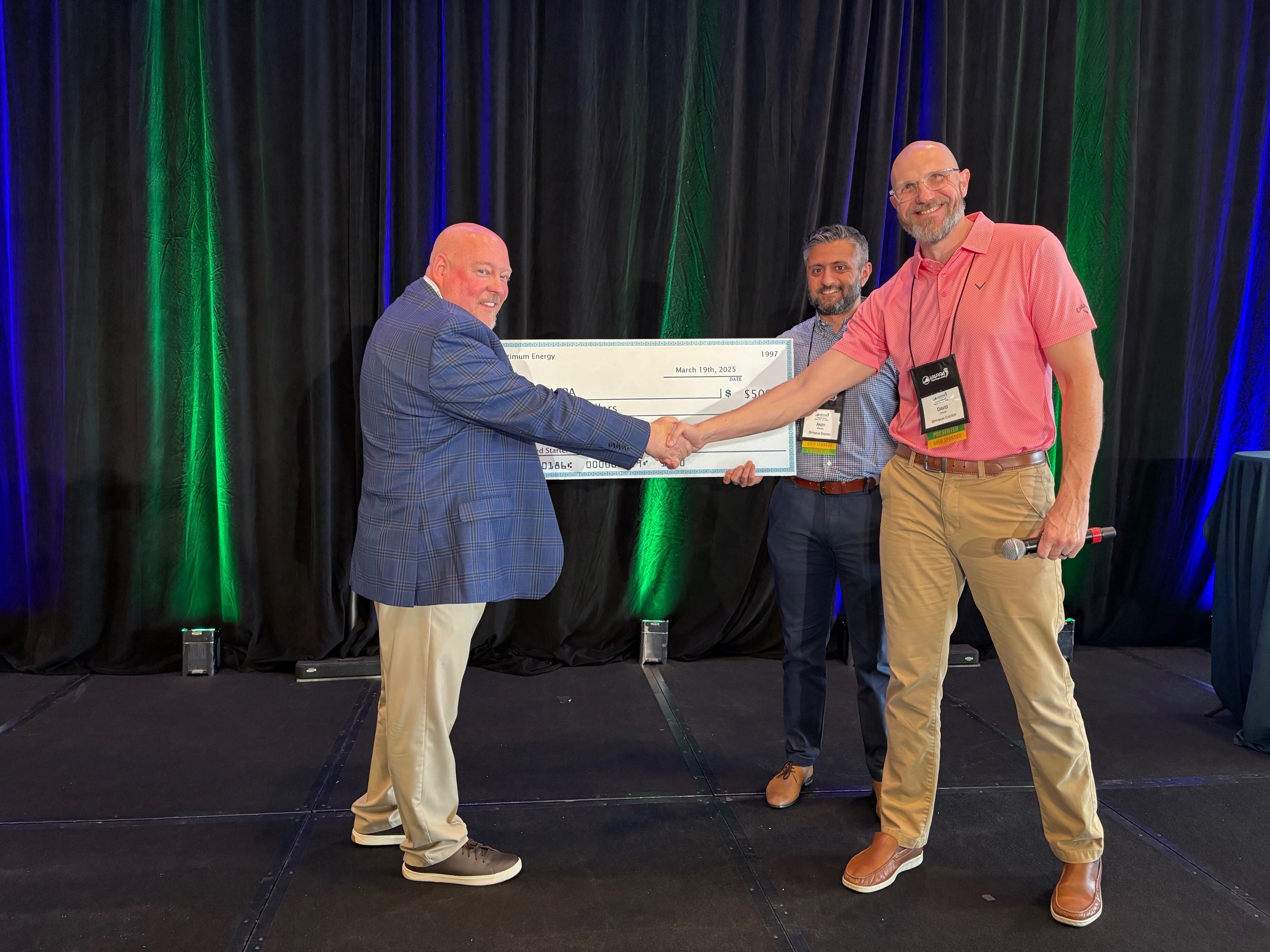
Optimum Energy recently attended the Virginia APPA conference in Williamsburg, VA, joining facilities leaders from across higher education to discuss the future of campus operations. As part of our commitment to supporting the next generation of facilities professionals, Optimum Energy is proud to have contributed to the organization’s scholarship fund.

A key highlight was our session, “(Kilo)Watt’s the Problem? Balancing Efficiency and Reality in Campus Operations.” Led by Director of Sales David Dykes and Senior Director of Business Development Andy Pahwa, this exercise took a hard look at the practical realities institutions face. Sustainability goals and operational budgets often pull in different directions, and aging infrastructure adds complexity. The discussion focused on how to manage costs and operational risks while implementing forward-looking, efficient systems.

Participants engaged in a candid conversation about the balance between chasing every incremental efficiency gain and making smart investments that truly move the needle. Dykes and Pahwa shared strategies for navigating these trade-offs and provided actionable insights for energy optimization without overspending. The session underscored a simple truth: successful campus energy management requires both vision and pragmatism. By understanding operational realities and aligning them with long-term sustainability and financial goals, facilities teams can make smarter decisions today that pay off tomorrow.

As part of our commitment to supporting the next generation of facilities professionals, Optimum Energy contributed to the organization’s scholarship fund.

Emerging Trends in Energy Management: Insights from Lisa Roy, CEO of Optimum Energy

Emerging Trends in Energy Management: Insights from Lisa Roy, CEO of Optimum Energy

Published
29 January 2025

The energy landscape is undergoing a rapid transformation, driven by a confluence of factors including climate change, technological advancements, and shifting consumer preferences. As businesses grapple with the challenges and opportunities presented by this evolving landscape, innovative solutions are emerging to drive sustainability and efficiency. 

Lisa Roy, CEO of Optimum Energy, recently shed light on key trends shaping the future of energy management during the Decarbonization Disruptors podcast. In this blog post, we delve into three critical themes she highlighted: electrification and grid interaction, the rise of machine learning and AI, and the complexities of decarbonization. 

Electrification and Grid Interaction: A New Era of Energy Supply 

Electrification is rapidly reshaping the energy sector, increasing demand for more resilient and adaptable energy systems. On-site energy generation and grid interaction are becoming increasingly important as businesses seek to enhance reliability and sustainability. 

Machine Learning and AI: Unlocking the Power of Data 

“We are drowning in data but starving for insights.” This statement rings truer than ever in the energy sector, where vast amounts of information are generated every second.  As Lisa Roy, CEO of Optimum Energy, puts it: 

“At Optimum Energy, we believe data is the new currency of energy. It’s the key to understanding how energy is being used, where it’s being wasted, and how we can improve efficiency.  By harnessing the power of data and AI, we can unlock unprecedented levels of optimization and sustainability.” 

Advanced analytics powered by machine learning and AI are essential for turning this data deluge into actionable intelligence. These technologies can help businesses identify inefficiencies, optimize energy consumption, and predict maintenance needs. 

Predictive Maintenance: By analyzing historical data and real-time sensor readings, AI-powered systems can anticipate equipment failures, allowing for proactive maintenance and minimizing downtime. 

Energy Optimization: Machine learning algorithms can optimize energy usage by identifying patterns and anomalies, leading to significant cost savings. 

Decarbonization: A Complex but Necessary Journey 

Decarbonization has become a top priority for many organizations, but the path to a low-carbon future is fraught with challenges. To achieve their decarbonization goals, businesses must adopt a holistic approach that considers the entire energy value chain. 

Optimum Energy: Driving the Future of Energy Management 

At Optimum Energy, Lisa and her team are at the forefront of the energy revolution, providing cutting-edge solutions that help businesses navigate the complexities of the modern energy landscape. By combining advanced technology, deep industry expertise, and a customer-centric approach, Optimum Energy empowers organizations to optimize their energy consumption, reduce costs, and achieve their sustainability goals. 

To learn more about how Optimum Energy can help your business, visit their website or contact their team today. 

Holistic Design-Build Optimization Transforms North Pole Operations to Meet Santa’s Unique Needs

Holistic Design-Build Optimization Transforms North Pole Operations to Meet Santa’s Unique Needs

Published
23 December 2024

Overview

Santa’s Workshop, the global epicenter of holiday joy and gift production, has announced a transformational partnership with Optimum Energy. This initiative focuses on modernizing Santa’s aging infrastructure, ensuring seamless delivery of holiday magic while prioritizing sustainability and efficiency.

The partnership includes optimizing Santa’s Central Utility Plant (CUP), retrofitting workshop HVAC systems, and leveraging patented machine learning technologies for energy savings. Together, these efforts are set to enhance operations across the North Pole and beyond.

About the North Pole Operations: A Magical but Massive Enterprise

The North Pole, the headquarters of Santa’s global gift logistics empire, is a sprawling, bustling facility covering approximately 5 million square feet. Like a small city, this expansive operation is designed to produce, package, and distribute billions of toys annually. However, maintaining such a vast and diverse operation has grown increasingly challenging over the centuries.

Here’s an inside look at the scale and complexity of Santa’s North Pole operations:

The Challenges of Holiday Logistics

Santa’s operations are legendary but not without their challenges. The North Pole’s extreme conditions have affected aging boilers, chiller plants, and reindeer stables. Manual processes for tracking toy production and inventory have left little time for strategic planning—or for Santa to enjoy his iconic hobby, perfecting hot chocolate recipes.

“Our systems were older than Rudolph’s first sleigh run,” said Santa Claus, Christmas Executive Officer (CEO). “We required a partner who could deliver cutting-edge solutions and help us keep the magic alive for generations.”

Challenges at Scale

Aging Infrastructure: With millions of square feet to maintain, outdated systems are no longer sufficient to meet the North Pole’s growing needs.

Optimizing & Modernizing the North Pole with Optimum Energy

Spreading Holiday Cheer Beyond the Workshop

The modernization efforts have given Santa and his team the bandwidth to explore new ventures. Inspired by his iconic look, Santa is introducing a luxury line of candy cane-infused beard oils for the first time in centuries.

“Thanks to Optimum Energy, I finally have time to innovate!” Santa exclaimed. “The elves are less stressed, the reindeer are happier, and I’m finally focusing on my dream projects, like my snow cone franchise.”

Future-Proofing Festive Magic

Santa’s new energy strategy is not just about this Christmas—it’s about ensuring the magic lasts centuries. The partnership includes:

“It’s a Christmas miracle for the modern age,” Santa concluded. “The world counts on us, and now, we’re more ready than ever to deliver joy to every corner of the globe.”

The North Pole Outcomes

These groundbreaking gains not only future-proof Santa’s operations but ensure that every child in the world wakes up to the joy of a thoughtfully crafted gift. The North Pole is now a beacon of sustainability, efficiency, and unmatched holiday cheer!

“Optimum Energy was crucial to our transformation, and we wouldn’t have reached this milestone without them,” stated Santa Claus, CEO of Christmas. From optimizing our energy systems to enabling remote monitoring of the entire facility, they have helped us future-proof the North Pole while ensuring every child wakes up to the magic of Christmas. Now, even when I’m away delivering gifts, I know everything is as it should be at the North Pole!”